From 1 October 2026, credit card surcharges are officially getting scrapped across Australia.
Following broader Reserve Bank of Australia (RBA) regulatory updates designed to simplify payments, card providers are dropping additional credit card processing fees.
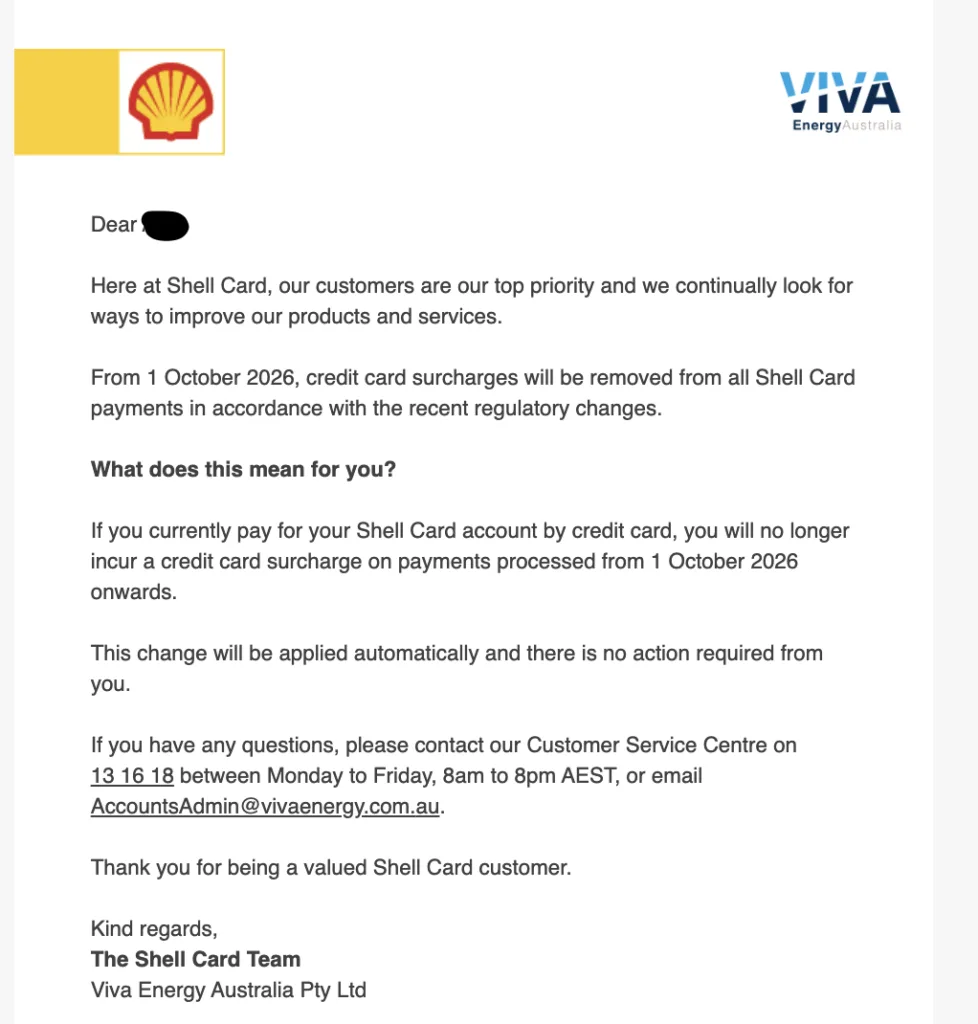
For example, Shell Card recently notified cardholders that all credit card surcharges on account payments will automatically drop to 0% starting in October.
While this is great news for reducing administrative friction, it raises a bigger question for business owners and fleet managers:
When was the last time you actually reviewed your fuel card fees and benefits?
What We’re Seeing in the Market
Here at Fuel Card Comparison, I see a lot of businesses sticking with the same fuel card for years out of habit. But as payment rules shift across the country, fee structures and reward perks are evolving, too.
The removal of payment surcharges levels the playing field in terms of processing costs, meaning the real value of a fuel card now comes down to a few main things:
- Per-litre fuel savings
- Low monthly card fees
- Network convenience
- Added features and benefits
Is the Shell Card the Right Fit for Your Fleet?
With card payment processing fees out of the way, the Shell Card continues to be one of the most competitive options on the Australian market, particularly for small-to-medium fleets and sole traders looking for maximum site access without hidden extras.
Here’s why it’s standing out right now:
- Great Pump Discounts: You get fixed savings off regular and premium fuels across participating networks.
- Solid Site Acceptance: Usable at over 1,600 locations nation-wide—including Shell, Reddy Express, Liberty, and Westside stations.
- Zero Transaction Fees: On top of dropping credit card surcharges, Shell doesn’t charge per-transaction swipe fees at participating sites.
- Smart Alerts & Fleet Control: Fleet managers can set custom parameters in the portal—like daily spending limits, fuel volume caps, or usage hours—and receive instant email or SMS alerts if a driver spends outside their designated rules.
- Accounting Integration: Direct syncs with Xero and MYOB take the pain out of tax time.
Who is it best for?
The Shell Card is an ideal fit if your drivers regularly travel major transit routes, if you want simple monthly accounting without per-transaction processing fees, or if you simply want a reliable single-brand network with great fuel discounts.
However, if your drivers operate in remote regional areas where Shell isn’t as prevalent, a multi-brand option, like FleetCard or WEX Motorpass might still be worth considering.
The Bottom Line: It’s Time for a Quick Audit
The national removal of credit card surcharges means you no longer have to worry about extra fees eating into your margins when paying off your fuel bill. But don’t let savings stop at the checkout.
If you haven’t reviewed your fleet’s fuel strategy in the last 12 months, now is the perfect time to stack your current provider against the competition.
Find out which fuel card suits your fleet