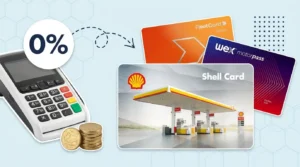
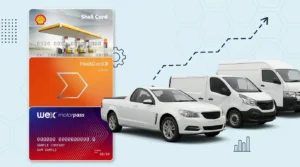
We get asked about salary sacrifice fuel cards constantly. A business owner hears that their mate is salary sacrificing their car and fuel and suddenly wonders if they’re missing out on tax savings. Or someone reads about pre-tax salary deductions and thinks it must apply to their whole fleet.
The honest answer: it depends on your situation – but most small businesses in Australia land in the same place once they understand how both options actually work. We’ve put together this guide to save you the hours of research. We’ll give you our verdict upfront (we know you’re busy), then walk you through a detailed comparison and a five-question decision guide so you can be confident you’re making the right call.
| Our Verdict
For most small businesses in Australia: get a business fuel card. It’s simpler and gives you real control over your fuel and car expenses. Skip the salary packaging arrangement unless you have staff who specifically want to novated lease their personal vehicle – and even then, treat it as an individual employee benefit, not a fleet management tool. If you’re spending a few thousand dollars a month on fuel across a small fleet – utes, vans, company vehicles – a business fuel card is the better product. You’ll save money via ongoing per-litre discounts, reduce admin, and claim your GST savings without setting up a single salary packaging arrangement. Case study We reviewed operating costs from three Australian trade businesses running between 3 and 9 vehicles during the 2025–26 financial year. In every case, the businesses using standard fuel cards spent materially less time on administration than businesses managing employee reimbursement or salary-packaged vehicle arrangements. One electrical contractor estimated their monthly bookkeeping time dropped from roughly 6 hours to under 90 minutes after moving all drivers onto FleetCard with Xero integration enabled. Across the same period, direct pump discounts and GST credits combined to reduce annual fleet costs by just over $8,400 across six diesel vehicles. None of the owners believed a full salary packaging structure would have produced enough additional benefit to justify the compliance overhead for a small team. |
Find out which fuel card suits your fleet
Salary Sacrifice vs Business Fuel Card: What’s the Difference?
Business Fuel Card
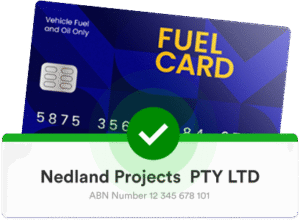
A business fuel card is issued in your company name – your ABN, your account. Your drivers use it to fill up at participating service stations, and you get one consolidated invoice covering all transactions. You set the limits per card, restrict purchases to fuel and car running costs if you want, and the whole thing flows through as a normal business expense.
Tax treatment is clean: fuel is a legitimate car expense, you claim the deduction, and you claim the GST input tax credit on your BAS. No fringe benefits tax. No salary deductions from employee pay. No third-party packaging provider.
Most cards also cover running expenses beyond fuel – tyres, oil, roadside assistance, and depending on the card, non-fuel purchases at the servo. Some cards now, like Fleet Card cover EV charging too, which matters if you’re running or transitioning to a mixed fleet.
Salary Sacrifice Fuel Card
A salary sacrifice fuel card sits inside a novated lease or salary packaging arrangement. The employee agrees to salary sacrifice – meaning they give up part of their pre-tax salary – and in exchange, the employer pays for certain car running costs on their behalf. The fuel card draws from a running costs budget funded by those pre-tax salary deductions.
Because the fuel spend comes from pre-tax salary rather than take-home pay, the employee pays less income tax and potentially reduces their taxable income. They can bundle fuel, registration, comprehensive insurance, servicing, tyres, and even lease payments into one salary packaging arrangement – all from their pre-tax income. For an employee on a higher income using a vehicle, this can deliver genuine tax benefits.
But the employer takes on fringe benefits tax (FBT) obligations the moment a salary sacrifice arrangement is established. FBT is calculated on the taxable value of the benefit provided, reported in an FBT year (1 April to 31 March), and lodged with the ATO by 21 May. That means extra compliance, extra admin, and often the cost of a salary packaging provider to manage it.
| Important: Once an employee’s fuel and car expenses are inside a salary sacrifice arrangement, they generally can’t also claim those same costs as a personal tax deduction. It’s one or the other – not both. The ATO is clear on this. |
Side-by-Side Comparison
| Feature | Business fuel card | Salary sacrifice fuel card (novated) |
| Who benefits | The business – control, GST, deductions | The employee – lower taxable income |
| Tax benefit | GST input tax credits + business deduction | Income tax reduction via pre-tax salary sacrifice |
| FBT obligations | None (if business use managed correctly) | Yes – employer calculates, reports and pays FBT annually |
| Admin complexity | Low – one invoice, standard bookkeeping | High – salary packaging, payroll changes, FBT year lodgements |
| What’s covered | Fuel, tyres, car running costs (card-dependent) | Fuel, rego, insurance, servicing, lease payments |
| Vehicle ownership | Company vehicle or employee vehicle | Employee’s vehicle – new, used, or novated lease |
| EV eligible? | Yes – some cards cover EV charging (e.g. Chargefox) | Yes – FBT-exempt for eligible electric vehicles |
| Suitable for | Small business, trades, construction, any fleet | Larger employers, higher-income staff, not-for-profits |
| Setup time | Apply online – cards arrive within days | Novated lease or salary packaging arrangement required per employee |
| Fuel discounts | Yes – 1–4c/L ongoing, up to 6–10c/L promo | Depends on packaging provider and card used |
The Decision Guide: 5 Questions to Find Your Answer
Question 1: Are your vehicles used mainly for business, or does an employee also use one as their personal car?
Mainly business use: A standard business fuel card is the right call. You get clean GST savings, deductible car expenses, and no FBT exposure as long as personal use is managed appropriately.
An employee uses a vehicle as their own car (significant personal use): This is exactly what novated leases are designed for. The employee gets a genuine personal benefit from the vehicle, and a salary sacrifice arrangement lets them fund the car – purchase price, repayments, fuel, rego, insurance – from pre-tax salary.
Question 2: How many employees do you have, and how formal is your payroll setup?
Under 15–20 staff, basic payroll: A salary packaging arrangement requires your payroll system to handle pre-tax salary deductions, FBT calculations, FBT year reporting to the ATO, and the administrative relationship with a packaging provider. For most small operators, that’s a real burden. Business fuel card wins here.
Larger team with dedicated HR or finance: You’re more likely to have the infrastructure to manage salary packaging properly. Salary sacrifice becomes worth exploring seriously, particularly as an employee benefit to attract and retain staff.
Question 3: Who is actually asking for this – you, or one of your employees?
You want to reduce and control business fuel spend: Business fuel card. It gives you consolidated invoicing, per-card limits, GST savings, and real-time spend visibility. Salary sacrifice is an employee benefit – it won’t help you control fleet costs or simplify your bookkeeping.
An employee has asked about salary sacrificing their car: That’s a different conversation. It’s worth understanding what they want and whether a novated lease suits their personal circumstances. Just be aware you’d be taking on FBT compliance as their employer – weigh that up carefully, and make sure the employee gets independent financial advice before committing.
Question 4: How much time do you have for compliance?
You want things simple: Business fuel card. Setup is quick, the tax treatment is straightforward, and it adds almost nothing to your monthly admin. One invoice, one reconciliation.
You have dedicated support or a provider: Salary sacrifice is manageable if a packaging provider handles day-to-day compliance. You’re still the employer responsible for FBT – but the workload can be outsourced. Factor in provider fees and weigh them against the tax benefits before committing.
Question 5: What are you actually trying to achieve?
Cut and control business fuel and car expenses: Business fuel card. Full stop.
Offer competitive employee benefits, attract staff, or help employees pay less tax: Salary sacrifice and novated leases are genuine tools for this. A well-structured arrangement – particularly for a new car or for an electric car (which may be FBT-exempt) – can be a meaningful perk that improves take-home pay for your team.
Both: You can do both. Use a business fuel card for your fleet. Offer novated lease arrangements to employees who specifically request it. They serve different purposes and aren’t mutually exclusive.
What Do the Savings Actually Look Like?
Let’s put some real numbers on it. We’ve used current market data (March 2026) based on a business spending $3,000/month on fuel – around 1,500 litres.
Business Fuel Card – $3,000/month fuel spend (approx. 1,500 litres)
| Card | Promo discount | Monthly saving (1,500L) | Notes |
| Shell Card | 6c/L (6 months) | $90/month | No card fee during promo. Strong metro and regional coverage. |
| WEX Motorpass | 5c/L (6 months) | $75/month | 6,000+ sites nationally – Shell, BP, Caltex, 7-Eleven, Ampol, United, Mobil. |
| FleetCard | 6c/L (6 months) | $90/month | 6,000+ sites nationally – Shell, BP, Caltex, 7-Eleven, Ampol, United, Mobil. |
On top of per-litre savings, don’t forget the GST input tax credits. At $3,000/month spend, the GST component is around $273/month – which you’re claiming back through your BAS as a normal business deduction. That’s over $3,200 per year back in the business.
Salary Sacrifice – What an Employee Might Save
The tax benefits of salary sacrificing a car and running costs depend heavily on the employee’s income, the vehicle’s purchase price, how much personal use occurs, and whether the vehicle is an electric car (which may be FBT-exempt). A higher-income employee driving a new car with significant personal use can see genuinely meaningful savings on their income tax and take-home pay.
But the savings flow to the employee – not the business. And the employer’s FBT liability can partially or fully offset those savings depending on how the arrangement is structured. Anyone seriously considering a novated lease should use a novated lease calculator and get proper financial advice before committing to a lease term.
When Salary Sacrifice Actually Makes Sense
We want to be fair here – salary packaging arrangements are legitimate and genuinely useful in the right context. Here’s when they’re worth it:
- Higher-income employees: The income tax savings from salary sacrificing are proportionally larger for employees on higher marginal tax rates. A senior employee on a significant salary driving a new car can see real benefit.
- Employees who want to bundle everything: A novated lease lets an employee roll the purchase price, repayments, fuel, rego, insurance, servicing, tyres, and roadside assistance into a single pre-tax salary deduction. For the right person, that’s a genuinely attractive package.
- Electric cars and EVs: FBT-exempt EVs make novated leasing considerably more tax-effective than it used to be. If an employee wants a Tesla or another electric car, salary sacrificing it is worth serious consideration.
- Not-for-profit organisations: NFPs often have additional FBT concessions that make salary packaging – including fuel cards – far more advantageous than in a standard Pty Ltd employer context.
- Staff retention and employee benefits: If you’re competing with larger employers on perks, offering novated lease arrangements as an opt-in benefit (with financial advice available to staff) is a legitimate and valued perk.
| In all of these cases, the arrangement should be set up properly, the employee should understand the lease term, residual value, and ongoing salary deductions, and ideally both parties should get independent financial advice before proceeding. |
The Bottom Line
We’ve helped thousands of small businesses across Australia get their fuel and car running costs under control. The advice is almost always the same: if you’re a small business managing a fleet, get a business fuel card, claim your GST savings, and don’t add compliance overhead you don’t need.
If one of your employees wants to salary sacrifice a new car or an electric vehicle – and their personal circumstances make it worthwhile – that’s a separate conversation worth having, ideally with a salary packaging provider and independent financial advice involved.
But as a fleet management tool? Business fuel card wins. It’s simpler, it works from day one, and it keeps your running costs, bookkeeping, and ATO compliance straightforward.
Find out which fuel card suits your fleet
Note: This guide is general information only. Tax rules around FBT, salary sacrifice, and vehicle deductions can change. Speak with your accountant or a salary packaging provider before setting up any arrangement.