The short version: Petrol prices go up 1 July. The financial year ends 30 June. If you’re running a fleet without a fuel card, now is the time to get onboard. For most small businesses, we’d start with FleetCard Classic, where if you sign up before the end of the month, you’ll earn up to $500 cashback and save up to 6c per litre off fuel. If Shell routes are your reality, Shell Card’s 7 cents per litre promo is hard to ignore for the first six months. For a full side-by-side, the best fuel cards for small business page is where to start.
Australians are about to get hit at the bowser. Again.
The federal government’s fuel excise cut, which slashed 26 cents per litre off petrol prices in response to soaring global oil costs, is set to expire at the end of June. The NRMA estimates the average for unleaded in Sydney will hit $1.99 per litre in July. Diesel is projected at $2.37. That’s a 40-cent jump on petrol and 65 cents on diesel compared to pre-conflict prices.
Transport Minister Catherine King has confirmed there’s no fuel excise cut extension planned. The relief measure ends 30 June regardless of what’s happening in the Middle East.
For businesses running a fleet, it’s a real cost increase landing at the start of a new financial year, and there are two weeks left to do something about it.
Read more: The Best EOFY Fuel Card Deals 2026
2021 Promotion: Shell Card

Why right now is the best time to get a fuel card
Every year, the EOFY window creates a straightforward case for reviewing your fuel setup: maximise deductions before 30 June, tighten reporting, start the new financial year with cleaner systems. This year, there’s a second layer. Any fuel purchased before 30 June still benefits from the current excise rate. The spend you record in June belongs to the cheaper pricing environment. From 1 July, the same litres cost more.
Getting a fuel card in place before the financial year ends means your first month of post-excise pricing has a per-litre discount working against it rather than full retail prices compounding on top. If your business is still buying fuel without a card, you’re leaving money on the table in the most expensive fuel environment we’ve seen since the conflict began.
What the fuel price rise actually costs your business
A trade vehicle doing 500 kilometres a week uses roughly 60 litres of unleaded. At the projected post-excise price of $1.99/L, that’s $119.40 per week per vehicle. At the pre-conflict average of $1.59/L, the same fill-up was $95.40.
That’s $24 more per vehicle, per week.
Five vehicles: $120 extra weekly. Twenty vehicles: close to $2,500 more per month, before you’ve reviewed a single thing about how your fleet is buying fuel.
A card discount of 6 cents per litre on that same 20-vehicle fleet at 60 litres each per week saves roughly $1,440 per month. It doesn’t eliminate the price rise, but it meaningfully offsets it. The businesses least exposed to fuel volatility right now are the ones with discount structures locked in at point of purchase.
Which fuel card we’d choose, and for who
We’re constantly reviewing every major Australian fuel card, and here’s what we’d recommend when we factor in the current pricing environment and the EOFY window.
For most small businesses: FleetCard Classic
If we’re putting our hand up for a single recommendation for a small business with one to ten vehicles, it’s FleetCard Classic. Right now it’s offering 6 cents per litre off and up to $500 cashback for new customers through the EOFY26 deal, with a card fee of $2.99 per month. The network covers over 90% of fuel sites nationally, which matters more than most people realise until a driver is on a regional run and the nearest in-network site is 40 kilometres away.
One example of the benefits of FleetCard that’s stuck with us came from a plumbing business operating eight vehicles across the western suburbs of Melbourne. Before switching to FleetCard Classic, drivers filled up wherever was convenient and submitted receipts at month end. Within the first 45 days after implementation, the business identified six duplicate reimbursements and a recurring pattern of out-of-route fuel purchases that had never been visible in the receipt pile. Total fuel expenditure fell by 14% over the following quarter despite vehicle usage staying flat. The owner told us the reporting visibility delivered more value than the per-litre discount because it created accountability across the entire fleet that simply hadn’t existed before.
Save up to 6c per litre on fuel for your business
For larger fleets: FleetCard Corporate
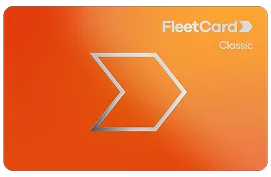
FleetCard Corporate is the tier for businesses that need more than a discount. Custom pricing negotiated to fleet size, a dedicated account manager, per-driver reporting, and spend controls per card. The pricing structure is the first meaningful difference. Where Classic and Rewards+ operate on a fixed 6 cents per litre discount, Corporate pricing is negotiated based on your fleet size and volume. Businesses pumping significant litres have more leverage in that conversation, and the resulting per-litre rate can outperform the standard discount tiers depending on what’s agreed. FleetCard Corporate also offers custom monthly card fee pricing.
The dedicated account manager is the main benefit here, especially for businesses that have outgrown self-serve support. Rather than working through a general helpline, Corporate accounts have a named contact who understands the fleet’s structure and can escalate issues or negotiate terms directly.
For businesses running Shell network routes: Shell Card
Shell Card is the standout on promotional rate right now: 7 cents per litre for the first six months with promo code CPM7FOR6, dropping to up to 4 cents per litre after that, and no card fees for the first six months. If your routes take you past Shell, Shell Coles Express, or Westside and Liberty sites regularly, that introductory rate is the best available discount of any card we’re currently listing.
The caveat is network dependency. Shell’s coverage is strong on specific corridors but thinner in regional areas compared to FleetCard. For metro-heavy fleets or businesses with predictable routes through Shell sites, it’s worth running the numbers against Classic.
We mapped a typical electrical services route covering metro Melbourne out to the Yarra Valley, roughly 380 kilometres of travel per week including both suburban and semi-regional calls. On weeks where drivers consistently passed Shell and Coles Express sites, the 7 cents per litre discount translated almost directly into savings. On the regional legs where the nearest participating site required an 18-kilometre detour, part of the benefit was absorbed by additional travel time and fuel. The exercise reinforced what we tell most businesses: the introductory rate matters, but network fit decides whether you actually capture it.
Save 7c/l + $0 card fees in promo period
For businesses that want maximum network flexibility: WEX Motorpass
WEX Motorpass takes a different approach to most cards on this list. Rather than tying discounts to a single branded network, Motorpass is accepted at over 6,000 fuel and service locations across Australia including independents, which makes it one of the most flexible options for fleets covering unpredictable routes or operating in areas where major branded sites are sparse.
It’s worth considering if your fleet operates in regional or rural areas where brand coverage is inconsistent, or if you want a single card that works across multiple fuel brands without drivers needing to seek out specific sites. The discount structure is different to the promotional rates on FleetCard or Shell Card, so it’s worth comparing the actual per-litre saving against your expected fill patterns before committing.
$0 card fees
For businesses wanting the highest ongoing discount: BP Plus and AmpolCard
Both BP Plus and AmpolCard currently advertise discounts of up to 8 cents per litre, which is the highest ongoing rate of any card we list. If your fleet runs predominantly near BP or Ampol sites and you’re prioritising the per-litre saving above all else, either card is worth a close look.
BP Plus gives you access to over 1,400 BP sites nationally, charges no AMEX processing fee, and connects to the BP Specialist Discount Network for additional savings on approved purchases. AmpolCard covers roughly 1,800 locations across Australia, the largest single-brand network on the list, and adds Everyday Rewards points earning with no transaction fees.
The trade-off with both is network specificity. An 8 cents per litre discount at a BP or Ampol site is excellent. A driver who can’t find one and fills up elsewhere at full retail wipes out weeks of savings in a single tank. These cards suit businesses where the route and the network genuinely overlap. If your vehicles cover mixed territory, the broader FleetCard network at 6 cents is more consistently capturable than a higher discount your drivers can’t reliably access.
The EOFY checklist before 30 June
Fuel spend through a business card is generally tax deductible in the year it’s incurred. Any spend recorded before 30 June belongs to FY25-26. Sign up now, use the card before end of month, and that spend lands in the current financial year.
Most fuel cards also provide detailed transaction data by vehicle, driver, and date. If you’ve been keeping paper receipts, switching before your June BAS reconciliation is a meaningful admin improvement.
Every EOFY we hear from business owners who planned to review their fuel arrangements but pushed the decision to later in the year. In 2024, one operator running nine vehicles delayed their review by just three months. When they finally pulled the data, the fleet had purchased more than 31,000 litres during that window with no discount structure and no consolidated reporting. The per-litre cost at full retail over those 90 days represented a savings gap of just over $1,860 compared to what FleetCard Classic would have delivered over the same period. The lesson wasn’t that a fuel card solves every cost problem. It was that waiting has a price.
If you’re not sure which card suits your business size or structure, the eligibility check takes under two minutes and doesn’t affect your credit score.
FAQs
Can I sign up for a fuel card and use it before 30 June?
Yes, and for most cards the turnaround is fast. FleetCard’s online application is same-day in most cases and cards typically arrive within three to five business days. Shell Card enquiries are processed through Viva Energy and timelines can vary, but applications submitted this week have a reasonable chance of being active before the financial year ends. Check the individual card pages for current processing times.
Does the fuel excise cut ending affect fuel card discounts?
No. The per-litre discounts offered through cards like FleetCard and Shell Card are applied on top of whatever the bowser price is at the time. When the excise rolls back and the bowser price rises, the card discount still applies to the new higher price. You’re not losing the discount, you’re just paying it against a higher base. That’s exactly why having a card in place before July matters.
Is fuel a tax deduction for my business?
Generally yes, if the vehicle is used for business purposes. Fuel purchased through a dedicated business fuel card creates a clear, itemised record of when, where, and how much was spent, which simplifies the deduction claim significantly compared to paper receipts. For vehicles used for both business and personal travel, only the business-use portion is deductible. Talk to your accountant about the specific split for your situation.
Does Shell Card work outside Shell stations?
Yes. Shell Card is accepted at Shell, Shell Coles Express, and participating Westside and Liberty sites. It’s not a network as broad as FleetCard’s 90%-plus national coverage, but for metro operators it’s generally workable. If your fleet includes regional routes, check the network map against your actual runs before committing.
How do I know if my business qualifies for a fuel card?
Most fuel cards require an ABN and a basic credit assessment. The easiest way to check without affecting your credit score is the eligibility check on this site. It takes under two minutes.