Fuel cards are no longer just for big fleets. In Australia, sole traders can also benefit from discounted fuel, easier expense tracking, and wider access to service stations. With providers like FleetCard, Shell Card, and WEX all offering options, the process is straightforward once you know what’s required. Here’s a practical step-by-step guide.
Can Sole Traders Apply for a Fuel Card?
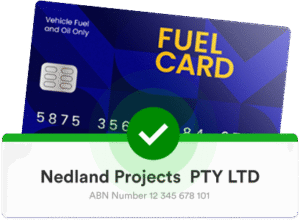
Yes. Most major fuel card providers in Australia accept sole traders. You don’t need to be a company or have employees. The key requirement is holding a valid ABN. Some providers will run a basic credit check to assess your eligibility, and in some cases, you may need to provide bank statements or trading history if you are newly registered.
Providers that accept sole traders include:
- FleetCard – Accepted at over 6,200 stations nationwide, covering Shell, BP, Caltex, United, Mobil, 7-Eleven, and more.
- Shell Card – A single-brand option with rewards like Flybuys, accepted at 1,500+ Shell stations.
- WEX Motorpass – A multi-brand card with access to more than 6,000 sites, flexible purchase controls, and no annual fee.
What Do You Need to Apply for a Fuel Card as a Sole Trader?
The exact documents vary by provider, but you’ll generally need:
- ABN – Proof of business registration as a sole trader.
- Driver’s licence or ID – To verify identity.
- Business details – Registered business name and address.
- Financial history – Depending on the provider, you may need bank statements or proof of regular income.
Some cards, like BP Plus or Shell Card, may approve you instantly if your ABN and ID are verified quickly.
Step-by-Step: How to Apply for a Fuel Card
- Compare providers – Look at coverage, discounts, and fees. For example, Fleet Card offers multi-brand acceptance, while Shell Card rewards frequent Shell users.
- Check eligibility rules – Ensure the provider accepts sole traders (most do) and review credit requirements.
- Complete the online application – Enter your ABN, business and personal details. Many providers have quick forms.
- Submit supporting documents – Upload identification and, if required, financial proof.
- Wait for approval – This can take from a few minutes to a few days, depending on the provider.
- Activate your card – Once approved, your card will arrive by mail. Activate it online or via the provider’s app.
What Fuel Discounts Can You Expect in 2025?
Fuel discounts vary by provider and by the type of fuel you use. The information below is accurate as of August 2025.
| Provider | Regular petrol (ongoing) | Premium petrol (ongoing) | Promo Discount |
| Fleet Card 🔥 | 1c at 7-Eleven/Ampol, 3c at Shell | 1c at 7-Eleven/Ampol, 3c at Shell | 3c at 7-Eleven/Ampol, 6c at Shell for 6 months |
| Shell Card 🔥 | 2c | 4c | 7c for 6 months |
| BP Plus | 2c | 3c | 6c for 6 months, plus Qantas points promo |
| WEX Motorpass | 1c | 1c | NA |
| Caltex StarCard | 4c | 4c | 7c for 6 months |
For a sole trader using 1,000 litres of fuel per month, even a 3c per litre saving equals $30 monthly, or $360 per year. Higher volume users can save much more.
What Fees Come with Fuel Cards?
Most providers charge a small monthly card fee and some add per-transaction costs outside their partner networks. Promos often cut these for a limited time. Here’s what to check before you apply.
- Monthly card fees. Expect around $2.50 to $5.99 per card per month. Fleet Card sits at the higher end. Shell Card, BP Plus, StarCard, United, and Ampol are typically around $2.50 to $2.99 per card. Some offers waive the fee for the first six months.
- Transaction fees. Many cards charge $0 at partner sites, then add a surcharge at non-partner stations. WEX and 7-Eleven Fuel Card may show a 0.75c per-transaction fee. Some StarCard products add a small surcharge if you fuel outside the Caltex network.
- Interest-free period. This varies a lot and affects cash flow. Fleet Card usually offers up to 51 days. BP Plus commonly offers around 21 days. Several closed-loop or brand cards range from 0 to 21 days. If you pay weekly or fortnightly, shorter terms may not matter, but if you pay on statement, longer terms help.
- Card surcharges on invoice payments. If you settle by credit card, providers pass on merchant fees. Visa and Mastercard surcharges are common, with Amex higher. If you want to avoid these, use bank transfer or direct debit.
- Promo pricing. Many 2025 promos waive monthly fees or cut them in half for 6 months. Check the end date and what the standard fee returns to after the promo.
- Other costs to watch. Additional card reissue fees if you lose a card. Paper statement fees. Late payment fees if you miss the due date. Some networks also charge for purchases outside allowed categories if you have controls turned on.
How to compare fuel card fees
Add up your likely monthly card fees, assume your real transaction pattern across partner and non-partner sites, then factor in your payment terms. If you visit multiple brands each week, a multi-brand card with $0 partner transaction fees can outweigh a slightly higher monthly card fee.
Which Fuel Card is Best for Sole Traders?
- Fleet Card is best if you want the widest coverage across multiple brands.
- Shell Card suits sole traders who fuel mostly at Shell and want Flybuys rewards.
- WEX Motorpass is ideal if you want flexible controls and access to more than 6,000 stations.
The right choice depends on your driving routes and how important rewards or discounts are for you.
Looking for a Fuel Card?
Start here with our Fuel Card Comparison Eligibility Check to see which fuel card can save your business the most.
Find out which fuel card suits your fleet
FAQs
Do sole traders need a business bank account to apply?
Not always. Some providers accept personal accounts linked to your ABN, but a business account can speed up approval.
What happens if I use the card for personal fuel?
You’ll need to track which expenses are personal and which are business for tax purposes.
Do fuel cards link to accounting software?
Yes. Many providers, including Shell Card, WEX and Fleet Card, integrate with Xero and MYOB, making it easier to reconcile fuel expenses.
What if I don’t qualify due to credit history?
Some providers may request a bond or pre-paid arrangement. Otherwise, you may need to build trading history before reapplying.