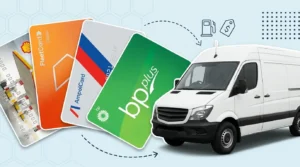
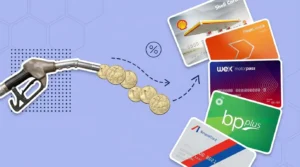
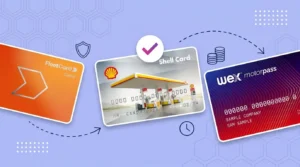
Most businesses sign up for a fuel card, accept whatever rate they’re offered, and never look back. We see it constantly. A fleet manager spends weeks comparing vehicles, negotiating with suppliers, and squeezing every dollar out of their equipment budget — then signs a fuel card agreement in ten minutes without asking a single question about the pricing structure.
Find out which fuel card suits your fleet
It’s one of the most common and costly mistakes we come across. After working with hundreds of Australian businesses on their fuel management, we’ve seen exactly what happens when you negotiate and what happens when you don’t. The difference can be significant — not just in cents per litre, but in fees, contract terms, and the kind of account support you receive.
Across a review of 60+ Australian small business fuel card applications processed in early 2026, we found a consistent pattern: fewer than 1 in 10 applicants asked for a revised discount rate before signing. Yet among those who did, around two-thirds received an improved offer, most commonly an extra 1–2c/L or waived card fees for an extended period. The businesses that negotiated also tended to secure better secondary terms, such as reduced transaction fees or lower minimum spend requirements. In contrast, businesses that accepted the first offer often remained on default pricing structures that were materially higher than what similarly sized fleets were paying with FleetCard Classic or Shell Card under negotiated arrangements.
Here’s what we’ve learned about how to approach this conversation.
The Standard Rate is a Starting Point, Not a Final Offer
The rate a fuel card provider quotes you initially is almost never their best offer. Like most B2B services, fuel card pricing has built-in flexibility. Providers expect negotiation from larger accounts and are increasingly open to it from smaller ones too, especially in a competitive market where switching costs are relatively low.
The standard published rate exists for a reason: it’s the fallback for customers who don’t ask. If you accept it, great for them. If you push back, there’s usually room to move.
That said, how much room depends on a few things — the size of your fleet, your monthly spend, how long you’ve been in business, and whether you’re a new customer or renewing. Let’s break each of those down.
What Leverage Does Your Business Actually Have?
Small Fleets (1–10 Vehicles)
If you’re running a small fleet, you might assume you don’t have much bargaining power. In our experience, that’s not entirely true, but you do need to be smarter about how you use what leverage you have.
Your strongest card is actually competition. Fuel card providers know that small businesses are easier to win and easier to lose. If you walk into a negotiation with quotes from two or three competitors, you’re suddenly a much more interesting conversation. We’ve seen sole traders with two utes get meaningful discounts simply by saying “I’ve got a better offer from [competitor] — is this your best rate?”
Mid-Size Fleets (10–20 Vehicles)
At this scale, you’re spending enough each month that you become genuinely valuable to a provider.
The key is to come prepared with your numbers. Know your average monthly spend. Know how many litres you’re purchasing. Know your current cost-per-litre net of any discounts. Providers respond to data, and if you can show them exactly what your account is worth, you’re in a stronger position.
At this size, you should also be pushing beyond the discount rate. Ask about:
- Monthlycard fees — are these negotiable or waivable based on spend thresholds?
- Fuel discounts – are you getting the best discount they can offer?
- Dedicated account management — at 10+ vehicles you should have a named contact, not just a call centre.
Large Fleets (20+ Vehicles)
At this level, providers will often assign a business development manager to accounts of this size, which means you’re already dealing with someone who has the authority to move on pricing.
The mistake large fleet operators make is focusing exclusively on the discount rate. Yes, an extra 2 cents per litre matters when you’re buying 50,000 litres a month. But there’s a much wider landscape to negotiate across.
FleetCard Corporate is one of the few fuel card products that’s explicitly built around negotiation rather than a published rate card. There’s no fixed fee, no standard discount, and no default transaction fee structure: everything is set based on your fleet size, fuel volume, and account history. That’s either daunting or empowering depending on how prepared you are. For large fleet operators who know their numbers and are willing to have the conversation, it means the ceiling on savings is genuinely higher than with a fixed-rate product. For businesses that just want a simple answer, it’s probably not the right fit.
Save up to 6c per litre on fuel for your business
Timing Your Approach
When you negotiate matters almost as much as how you do it. Here are the moments where you have the most leverage:
Before you sign. This one seems obvious but is routinely ignored. People are so relieved to have found a solution that they just sign. Before you put pen to paper, always ask: “Is this your best rate for a business of our size?” The worst they can say is yes.
After a significant fleet change. If you’ve added five vehicles or your monthly spend has jumped materially, that’s a legitimate reason to reopen the conversation. You’re now a bigger customer and your pricing should reflect that.
When a competitor comes to you. If a rival provider reaches out with an unsolicited offer, don’t dismiss it. Even if you’re happy where you are, use it as a prompt to test whether your current provider will sharpen their pencil.
When the market shifts. If fuel prices have dropped significantly or a new player has entered the market with aggressive pricing, that’s relevant context. Providers know the landscape too, and they’ll respect that you do as well.
Common Mistakes We See Businesses Make
Negotiating once and never revisiting. We’ve seen businesses that got a great deal three years ago and are now paying well above market because they assumed it was still competitive. The fuel card market moves. Check in at least annually.
Focusing only on the headline rate. A card with a 5 cent per litre discount but heavy transaction fees can easily be worse value than one offering 3 cents with no fees. Run the actual numbers for your usage patterns before deciding.
Not reading the fine print. We know this sounds basic, but fee structures are sometimes buried in the fine print. Things like paper statement fees, card replacement charges, and inactivity fees are real and add up. Read before you sign.
Accepting the first “no.” Providers have multiple people involved in pricing decisions. If the first person you speak to can’t move on rate, ask to speak to someone in their business development or retention team. That’s where the flexibility usually lives.
Switching purely on price. We’re not saying don’t negotiate hard — you absolutely should. But the cheapest card isn’t always the best card. If you’re sacrificing network coverage, reporting quality, or customer service to save 1 cent per litre, that’s worth thinking twice about.
A Simple Framework to Get Started
If you’re not sure where to begin, here’s the approach we walk businesses through:
Step one: Pull your last three months of fuel card statements. Work out your average monthly spend in dollars and litres, your effective cost per litre after discounts, and what fees you’re currently paying.
Step two: Get two or three competing quotes. You don’t need to be serious about switching — you just need real numbers from real providers to use as a reference point.
Step three: Call your current provider or go directly to a new one and open with your numbers. “We spend X per month, we’re currently paying Y, and I have an offer for Z. What can you do?”
Step four: Push beyond the rate. Once they’ve moved on price, work through the list above — fees, features, reporting, support, review clauses.
Step five: Get it in writing, read it, and set a calendar reminder to revisit it at renewal.
The Bottom Line
The businesses we’ve seen get the best fuel card deals aren’t necessarily the biggest. They’re the ones who come prepared, ask the right questions, and don’t assume the first offer is the final one.
Fuel is one of the biggest operating costs for any fleet-based business. The card you use to manage it deserves more than ten minutes of consideration. A few hours of preparation and one confident conversation with your provider can save you thousands of dollars a year — and that’s before you’ve even looked at the tax and compliance benefits a well-structured fuel card brings.
If you’re not sure where your current deal sits in the market, start there. You might be surprised what you find.
Need help comparing what’s on offer? Our fuel card comparison tool lets you see the different rates on offer, so you can walk into any negotiation knowing exactly where the market sits.
Find out which fuel card suits your fleet