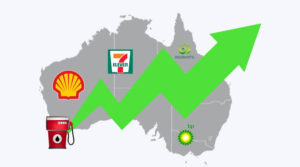
If you’re running a business with vehicles — whether that’s a single tradie ute or a full fleet of vehicles — fuel is almost certainly one of your biggest ongoing costs. We’ve spent years helping Australian businesses find the right business fuel card solution, and if there’s one thing we’ve learned, it’s that the right fuel card can make a massive difference to your bottom line. So let’s break down exactly how fuel cards work, what to look for, and why they’re worth considering for your business.
See which fuel card fits your business
Check eligibility
What Exactly Is a Fuel Card?
A fuel card – sometimes called a fleet card or fleet fuel card – is a dedicated payment card designed specifically for purchasing fuel and, in many cases, other vehicle-related expenses.
Think of it like a business credit card, but purpose-built for the bowser. Instead of having drivers pay out of pocket and claim reimbursements later (which is a bookkeeping nightmare), fuel cards let them fill up directly on the company account.
Plus, unlike regular debit cards or personal credit cards, fuel cards come loaded with features specifically designed for business fuel management: real-time reporting, spend controls, fuel discounts, and detailed transaction data that makes expense tracking a whole lot simpler.
How Do Fuel Cards Work, Day to Day?
Your business applies for a fuel card program with a provider, and they issue cards that can be assigned to individual drivers, individual vehicles, or both. When a driver pulls into one of the accepted service stations, they use the card just like any other payment card to pay for their fuel purchase.
Behind the scenes, a few things are happening that make this more powerful than a regular card swipe. The transaction is logged against that specific card, capturing details like the date, time, location, fuel type, and litres purchased. Depending on your card setup, drivers may also be prompted to enter a PIN, odometer reading, or number plate — all of which feeds into your fuel consumption and expense management data.
At the end of each billing cycle, you receive a consolidated invoice rather than a shoebox full of receipts. That single invoice covers all fuel spend across your entire fleet, which makes reconciliation and expense management dramatically simpler.
The Real Benefits of Fuel Cards for Australian Businesses
Fuel Discounts That Actually Add Up
One of the most tangible benefits of fuel cards is the fuel discounts off the pump price. Across the main fuel card providers in Australia, ongoing discounts typically range from 1 cent to 4 cents per litre, which doesn’t sound huge until you’re filling up a fleet every week.
For example, the 7-Eleven Fuel Card is currently offer 10 cents per litre off for the first 6 months for new customers — one of the strongest promotional offers on the market right now.
Shell Card is currently offering 7 cents off all fuel types for 6 months, with no monthly card fee during the promo period.
WEX Motorpass is currently offering 5 cents off for the first 6 months. These introductory rates can deliver meaningful cost savings during your first half-year, and the ongoing discounts keep working for you after that.
No More Reimbursements
Managing reimbursements is a pain for everyone involved. Drivers lose receipts, admin staff chase paperwork, and business owners end up with patchy records of their actual fuel expenses. Fuel cards eliminate that entire process. Fuel spend goes directly onto the business account, with no out-of-pocket costs for drivers and no reimbursements process to administer. It’s cleaner for everyone.
Detailed Reporting and Expense Tracking
This is where fuel cards really shine for fleet management. Every transaction is captured automatically, giving you detailed reporting on who bought what, where, when, and how much. You can track fuel usage by driver or vehicle, spot unusual patterns, monitor fuel consumption over time, and generate reports for your accountant at tax time — all without manually reconciling a single receipt.
Real-time visibility into fuel spend also means you can catch problems early. If a vehicle is suddenly using significantly more fuel than usual, that’s a flag worth investigating — whether it points to a mechanical issue, a change in driving behaviour, or something else entirely.
Spend Controls and Enhanced Security
Unlike personal credit cards or cash, fuel cards give you real control over how they’re used. Most business fuel cards let you set spending limits by card, restrict purchases to fuel only (blocking non-fuel purchases like snacks or car wash products), limit usage to certain fuel types, and flag or block transactions outside of normal working hours.
Shell Card leads the market with its smart alerts, allowing you to set custom rules for each card around transaction count, fuel volume, and total spend over a chosen period. Then, they’ll email you in real time if those limits are breached, if odometer data is missing, or if a vehicle’s fuel use suddenly looks abnormal, so you can spot misuse early and tweak or block cards before it turns into serious fraud.
These kinds of spend controls and enhanced security significantly reduces the risk of misuse, and gives business owners confidence that their fuel card program is being used as intended.
Improved Cash Flow
Most fuel cards offer an interest free period before payment is due. Fleet Card, for example, offers 51 days interest free – one of the longest on the market. The BP Plus Card and StarCard Flex both offer 21 days, and United Card offers 37 days. That breathing room can make a real difference to cash flow, especially for small businesses managing tight payment cycles.
Understanding the Fee Structure
One of the first things people ask us is: what do fuel cards cost? The good news is that most fuel cards in Australia have no joining fee, no annual fee, and no account fee. The main cost to factor in is the card fee per month, which varies by provider.
Here’s a quick overview of card fees across the major providers:
- Fleet Card charges $5.99 per card per month (reduced to $2.99 during their 6-month promo).
- WEX Motorpass is also $5.99 per card per month.
- Shell Card charges $2.50 per month (and $0 during the 6-month promo offer).
- BP Plus Card charges $2.95 per month for businesses with 3 or more cards, or $4.95 for businesses with fewer than 3 cards.
- 7-Eleven Fuel Card has no monthly card fee at all.
Transaction fees are another thing to check. Most cards charge $0 in transaction fees, but WEX Motorpass and the 7-Eleven Fuel Card charge 0.75 cents per transaction.
Fleet Card charges $0 at partner sites (Shell, Ampol, 7-Eleven) but applies a merchant fee at other locations. These can add up on high-transaction fleets, so it’s worth factoring them in.
Network Coverage: Where Can You Actually Use Them?
| Fuel Card | Sites | Accepted At |
|---|---|---|
| Shell Card | 1,500+ | Shell, Shell Reddy Express, OTR, Reddy sites |
| WEX Motorpass | 6,000+ | Shell, Caltex, BP, United, 7-Eleven, Mobil, Ampol and more |
| Fleet Card | 6,200+ | Shell, Caltex, BP, United, 7-Eleven, Mobil, Ampol, Budget, Payless, Metro Petroleum, Liberty |
| StarCard | 550+ | Caltex |
| AmpolCard | 2,000+ | WEX network access |
| BP Plus Card | 1,400+ | BP petrol stations |
| 7-Eleven Fuel Card | 640 | 7-Eleven locations only |
Fuel Cards vs. Credit Cards and Debit Cards
The biggest question we field day in and our is why not just use business credit cards? The honest answer is that for fuel and fleet expenses specifically, purpose-built fuel cards offer features that generic business credit cards simply don’t.
You get vehicle and driver-level reporting, fuel-type categorisation, automatic odometer prompts, spending limits that apply specifically to fuel purchases, and discounts negotiated directly with fuel networks. None of that exists on a standard Amex, Visa or Mastercard.
Debit cards have even less to offer in this space. There’s no credit facility, no reporting, no discounts, and no controls. For any business spending meaningful money on fuel, a dedicated fuel card is the smarter tool for the job.
Which Fuel Card is Right for Your Business?
We get asked this constantly, and the honest answer is: it depends on your business. But here are the key questions to work through.
How many vehicles do you have?
For small businesses with just a handful of company cars, cards with no card fee — like the 7-Eleven Fuel Card — or low card fees like the Shell Card ($2.50/month) or AmpolCard ($2.95/month) are worth prioritising. For larger fleets where card fees multiply, negotiating on fee structure or choosing a card with strong ongoing discounts (like StarCard at 4 cents per litre) can offset the fee cost quickly.
What are your typical driving routes?
If your drivers mostly drive past Shell or BP petrol stations, the Shell Card or BP Plus Card make obvious sense — you get strong discounts and a seamless experience at those specific service stations. If your fleet is spread across different routes and regions, a wide network card like the Fleet Card or WEX Motorpass gives you the broadest coverage without drivers hunting for an accepted fuel station.
What fuel type does your fleet use?
Premium diesel discounts vary noticeably across providers. WEX Motorpass offers 3 cents per litre off premium diesel (with an extra 1 cent on highway routes), while the Shell Card, 7-Eleven cards and StarCard all offer 4 cents per litre off premium diesel. If your fleet runs on premium diesel, those extra cents per litre can add up meaningfully over a year.
Two Cards Worth a Closer Look
Shell Card
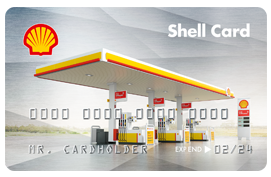
For businesses that regularly fuel at Shell or OTR/Reddy Express locations, the Classic Shell Card is consistently one of the strongest options. Ongoing discounts of 2 cents per litre on regular fuel and 4 cents per litre on premium fuel are solid. The current promotional offer is 7 cents off all fuel types for 6 months, with no monthly card fee during that period — making the first 6 months essentially cost-free. At $2.50 per card per month ongoing (with no charge for unused cards), it’s one of the more affordable fleet fuel cards for businesses with vehicles that don’t always refuel every month. Liberty fuel stations are also accepted, adding some extra network flexibility.
Save 7c/l + $0 card fees in promo period
WEX Motorpass
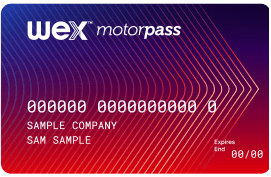
WEX Motorpass stands out for the sheer breadth of its fuel station network — 6,000+ accepted sites across Shell, Caltex, BP, United, 7-Eleven, Mobil, Ampol, Budget, Payless, Metro Petroleum, and Liberty. If your drivers are scattered across Australia and you can’t predict which brands they’ll encounter, WEX Motorpass is probably the most flexible fleet fuel card on the market. The 5-cent promo discount for the first 6 months is a good start, with 1 cent per litre ongoing and an extra cent off premium diesel on highway routes. The 0.75 cent transaction fee is something to factor in for high-transaction fleets, but for businesses that value network coverage above all else, WEX Motorpass is hard to beat.
$0 card fees
How to Streamline Fuel Management With a Fuel Card Program
Getting the most from a fuel card isn’t just about picking the right card — it’s about how you set it up and use it. Here are a few tips we share with every business we work with:
- Assign cards to vehicles, not just drivers. This makes it easier to track fuel consumption by vehicle and flag anomalies.
- Set up spend controls from day one — restrict cards to fuel purchases only, set per-transaction limits that match your vehicle types, and enable SMS or email alerts for large transactions.
- Use the reporting tools your provider offers. Even a basic monthly review of fuel expenses by vehicle can surface issues worth addressing. And make sure every driver knows the card is for business use only and understands the PIN and security requirements.
- On the admin side, integrating your fuel card data with your accounting software (most providers support this) can almost completely automate fuel expense management. That means less time on data entry and more accurate records come tax time.
The Bottom Line
Fuel cards are one of the simplest ways Australian businesses can take control of their fuel costs, streamline expense management, and eliminate the headaches that come with cash or personal card reimbursements. Whether you’re a sole trader with a work vehicle or managing a large national fleet, there’s a fuel card designed to fit how you operate.
The best fuel card for your business depends on where your drivers fuel up, how many vehicles you’re running, and whether network breadth or discount depth matters more to you. The data is clear: with promotional discounts of up to 10 cents per litre available right now, and ongoing savings of 2–4 cents per litre with the best cards, the cost savings are real — especially when you factor in the time and admin savings from proper expense tracking and detailed reporting.
We’re here to help you work through the options and find the best fuel card for your specific situation. Reach out to our team and we’ll walk you through it.
See which fuel card fits your business
Check eligibility*Fuel discounts and any fees listed are indicative only and subject to change. Actual savings often depend on factors such as business usage, monthly spend, card type, and provider terms. Always check with your chosen fuel card provider for the most up-to-date rates and eligibility criteria.